On behalf of the City of Los Angeles Department of Recreation and Parks (RAP), KDI supported a team led by OLIN to prepare the 2025 Park Needs Assessment for the City’s 16,000 acres of public parkland.
context
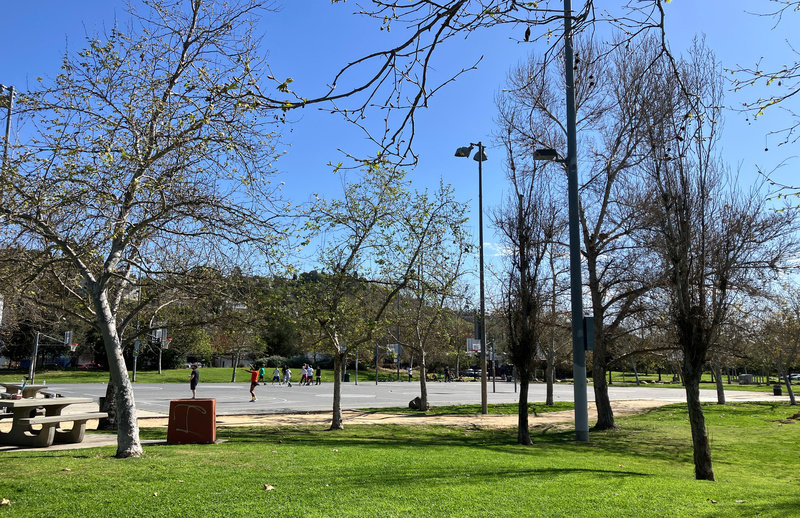
Rio de Los Angeles Park.
In 2025, the Trust for Public Land’s ParkScore ranked Los Angeles 90th out of the 100 largest U.S. cities, reflecting chronic underinvestment, failing amenities, and significant inequities in park access.
Across major American cities, an average of 76% of residents live within a 10-minute walk of a park. In Los Angeles, that figure drops to just 62%. Longstanding patterns of redlining and disinvestment have disproportionately limited access in low-income communities of color, where barriers to nearby, high-quality parks remain most severe.
At the same time, the Department of Recreation and Parks (RAP) faces mounting financial strain. Its budget has not kept pace with inflation, even as park acreage has expanded and obligations, such as reimbursing the City’s General Fund for staff benefits and utilities, have increased. With key funding sources set to expire in the coming years, the need for a comprehensive, systemwide strategy has become increasingly urgent.
In response, the Park Needs Assessment team undertook a citywide effort to identify current and future needs, challenges, and opportunities across RAP’s network of parks and recreational facilities. This process is intended to guide equitable investment and ensure the system evolves to meet the needs of Los Angeles’s diverse and growing population.
process
Through robust community engagement, peer city research, and analysis of local data, the PNA team set out to identify strategies to maintain, improve, and expand LA’s diverse network of parks, facilities, and programs.
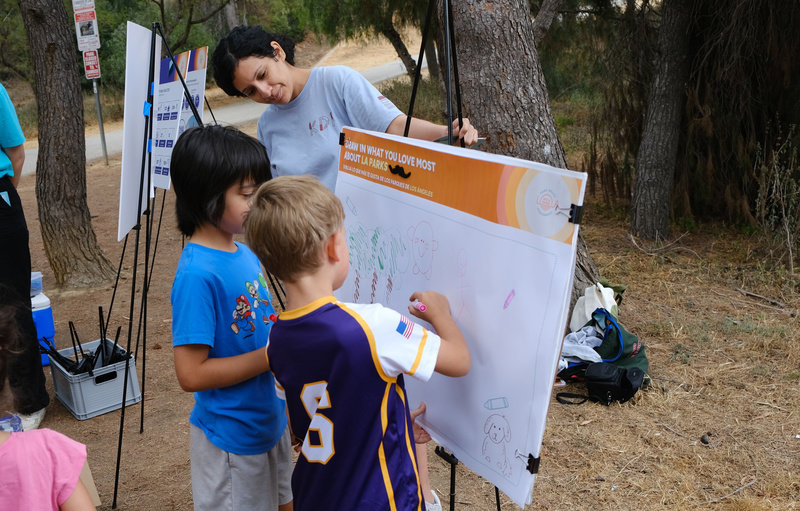
KDI team at Pop-Up workshop at Ernest Debs Park, 2025.
The engagement process raised awareness of the role the Department of Recreation and Parks plays in the City, collected input on needs and opportunities that reflect the diverse cultures and communities of Los Angeles, and elevated the voices of communities that have been traditionally excluded from planning and design conversations. Engagement spanned popups at existing community events, in-person and virtual open houses and worksessions, and partnering with 12 community partner organizations.
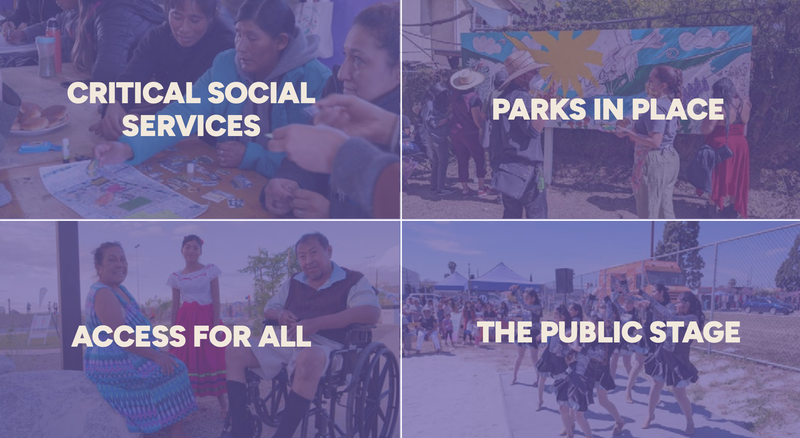
KDI co-led a series of 16 Equity Sessions, where we convened over 30 LA-based advocacy groups around the intersection of park equity and accessibility, arts, critical social services, and displacement. These meetings centered the lived experiences of participants to help shape more inclusive, equitable public spaces in the future. Attendees directly helped to shape the PNA Guidelines.
Equity Session topics. (PNA 2025)
To help document how needs vary in different parts of Los Angeles, the PNA summarized key parks, neighborhoods, Council Districts, and engagement findings within four geographic regions—West, North, South, and East/Central. KDI led analysis for Central and East Los Angeles, home to some of the most diverse and densest neighborhoods in the City. Our analysis highlighted how the region faces challenges of high park pressure, low park acreage, and displacement and green gentrification.
The PNA team also developed a prioritization tool that analyzes existing and prospective park sites across the City using indicators of park need, park pressure, and facility condition as well as social and environmental equity, resilience, and alignment with other City and County initiatives.
solution
The PNA identifies strategies to maintain, improve, and expand LA’s diverse network of parks, facilities, and programs.
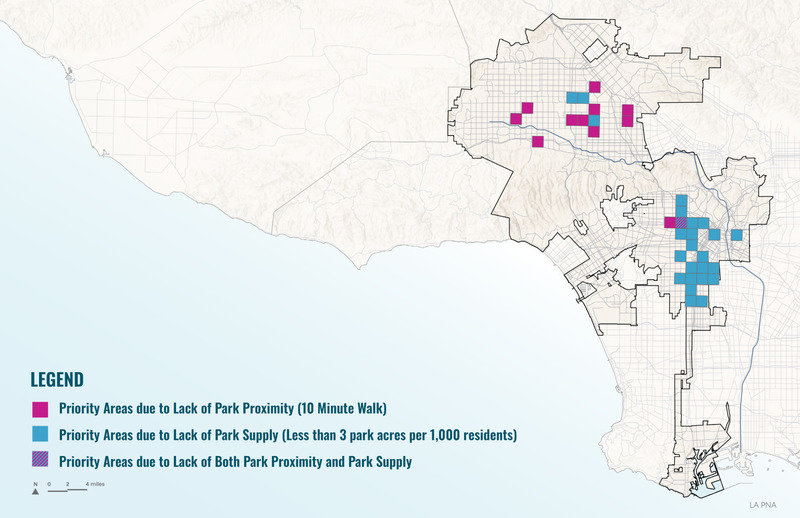
This map identifies New Park Priority Areas for addressing the top 25% of the need for new parks Access and additional park acreage (Supply), as part of the universe of sites for the PNA. (PNA 2025)
To identify potential areas where RAP should invest in developing new parks, the PNA team used the PerSquareMile tool, developed by GreenInfo Network and the UCLA Institute of the Environment and Sustainability. The tool analyzes park access, park supply, CalEnviroScreen 4.0, and California Disadvantaged Community maps. The team used this tool to identify 36 New Park Priority Areas to add to RAP’s 482 existing parks.
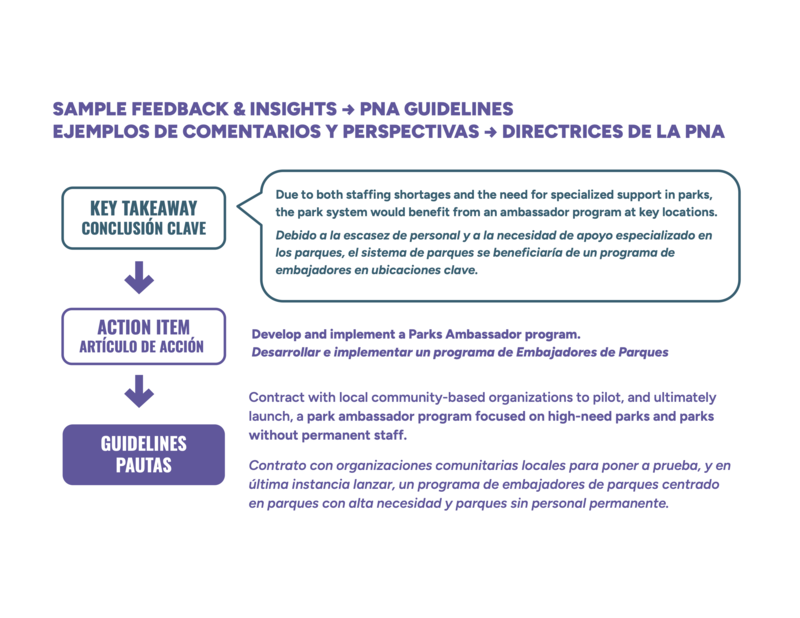
RAP’s annual assessment of their recreation amenities did not previously take into account site design and function. The PNA team developed site planning guidelines to help establish consistent principles for design, connectivity, sustainability, and access. KDI wove ideas from the Equity Sessions directly into these guidelines, calling for clearer wayfinding, ample seating, and more shade. The guidelines also ask RAP to coordinate with other city agencies to improve the connections with the existing street grid to enhance access.
Diagram shows how input from the Equity Sessions made it into the PNA Guidelines.
Additionally, KDI led the development of comprehensive engagement guidelines that promote meaningful, ongoing resident participation in RAP’s processes, ensuring parks reflect the diverse needs and priorities of Angelenos. The team translated the entire PNA document into an easy to use website for the public to engage with this city planning document on their own terms. Check it out here and find your own local park!
impact
The PNA provides both long-term guidance and day-to-day tools for managing the city’s recreation and parks system for the next fifteen years.
The plan, formally adopted in December 2025, lays out a path for sustainable funding, identifies highest priority sites, amenities, and programs, and sets level of service standards to get the city on track to match peer cities’ offerings. This community-engaged process lays the foundation for meaningful, ongoing resident participation in RAP’s process to help parks reflect the diverse needs and priorities of Los Angeles’ many neighborhoods.
Location
los angeles , usa
Year
2025
Service Area
plan + program
Partners
OLIN
Funders
City of Los Angeles Department of Recreation and Parks